

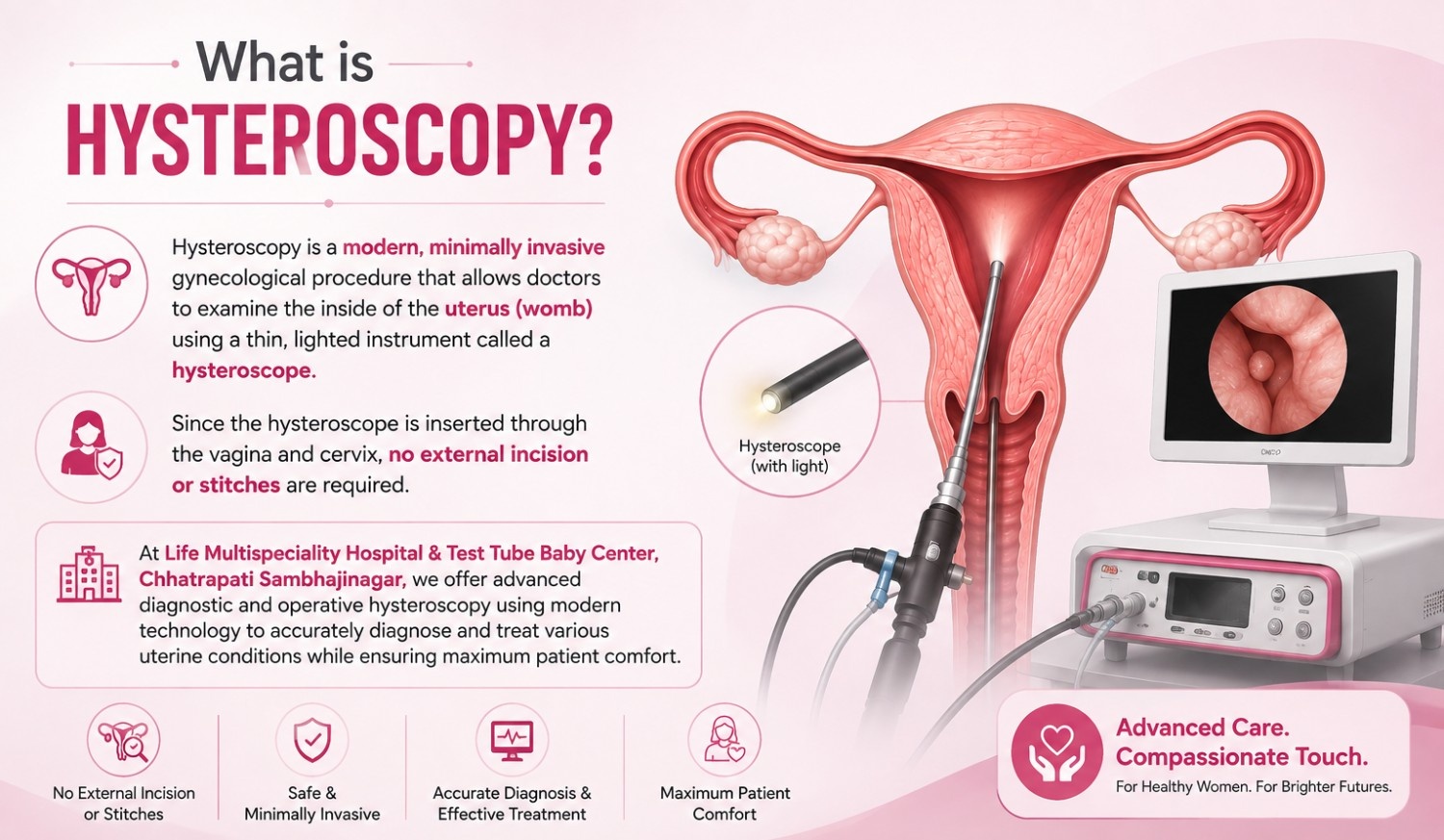
Hysteroscopy is a modern, minimally invasive gynecological procedure that allows doctors to examine the inside of the uterus (womb) using a thin, lighted instrument called a hysteroscope. Since the hysteroscope is inserted through the vagina and cervix, no external incision or stitches are required.
At Life Multispeciality Hospital & Test Tube Baby Center, Chhatrapati Sambhajinagar, we offer advanced diagnostic and operative hysteroscopy using modern technology to accurately diagnose and treat various uterine conditions while ensuring maximum patient comfort.
Hysteroscopy is a safe procedure that enables gynecologists to directly visualize the uterine cavity. It helps diagnose the cause of abnormal symptoms and, in many cases, allows treatment during the same procedure, reducing the need for major surgery.
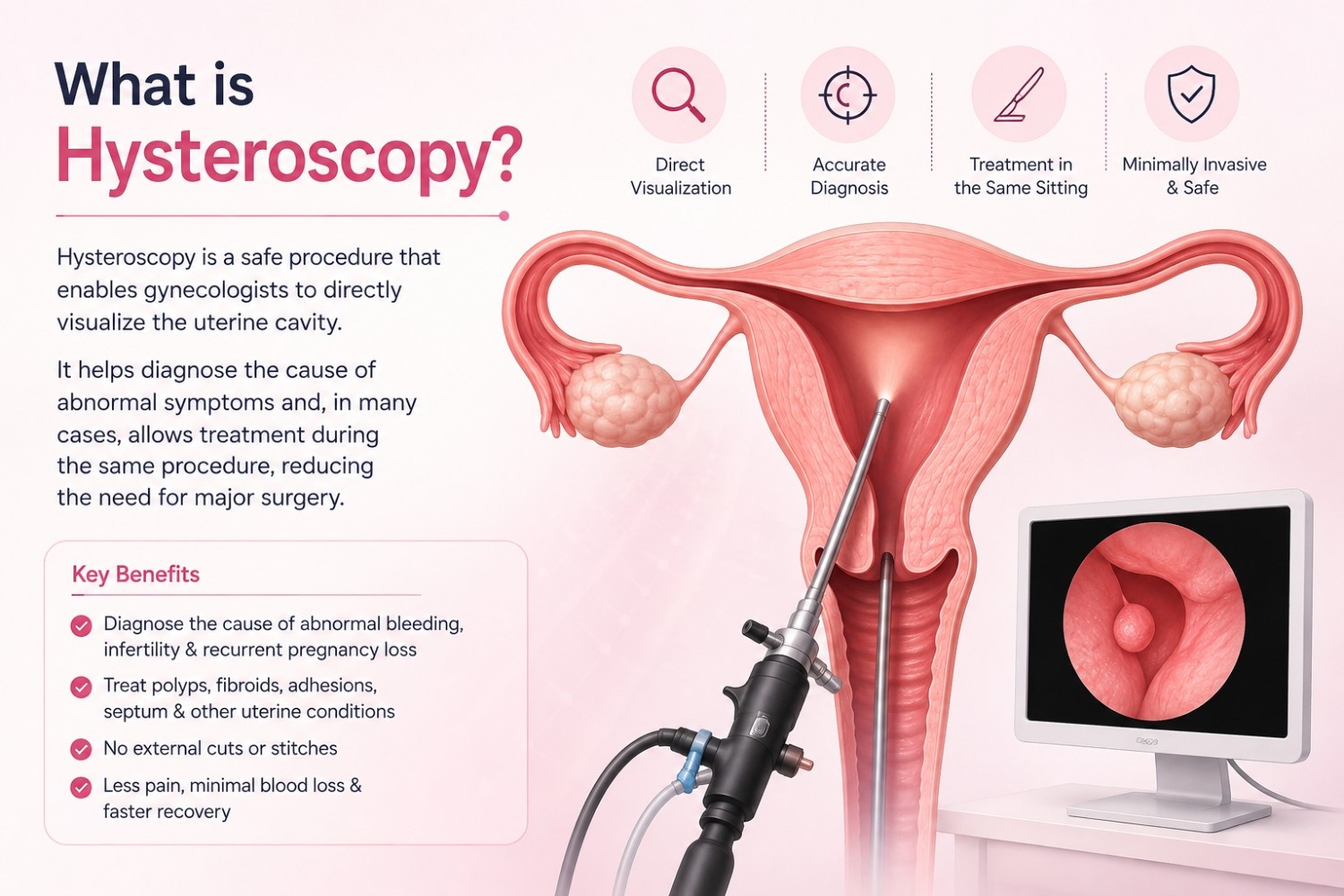
Hysteroscopy can be performed for diagnosis, treatment, or both depending on the patient's condition.
Diagnostic hysteroscopy is performed to examine the uterine cavity and identify abnormalities that may be causing symptoms such as abnormal bleeding, infertility, or recurrent pregnancy loss.
Operative hysteroscopy is used to treat uterine conditions during the same procedure.
It can be used to remove polyps, fibroids, adhesions, uterine septum, and retained tissue without making any abdominal incision.
Hysteroscopy offers a minimally invasive approach for accurate diagnosis and treatment of many uterine conditions.
Minimally invasive procedure
No external cuts or stitches
Accurate diagnosis
Diagnosis and treatment in one sitting when appropriate
Less pain and minimal blood loss
Faster recovery
Day-care procedure in many patients
Quick return to normal activities
May improve fertility in appropriately selected patients
The procedure is performed by inserting a thin hysteroscope through the vagina and cervix into the uterus. Sterile fluid is used to gently expand the uterine cavity, allowing the doctor to examine it clearly.
If any abnormality is found, specialized instruments can be used through the hysteroscope to treat it immediately.
Most women can return home on the same day. Recovery is generally quick, although individual recovery may vary.
Yes. Hysteroscopy is considered a safe and effective procedure when performed by experienced gynecologists.
Complications are uncommon but may include infection, bleeding, uterine injury, or reactions to anesthesia. Your doctor will discuss the benefits and potential risks before the procedure.
Find answers to common questions about hysteroscopy.
Comprehensive women's healthcare supported by experienced specialists and modern medical facilities.

Life Multispeciality Hospital & Trauma Center is a state-of-the-art healthcare institution dedicated to providing comprehensive, affordable, and compassionate medical care to the people of Marathwada and surrounding regions.