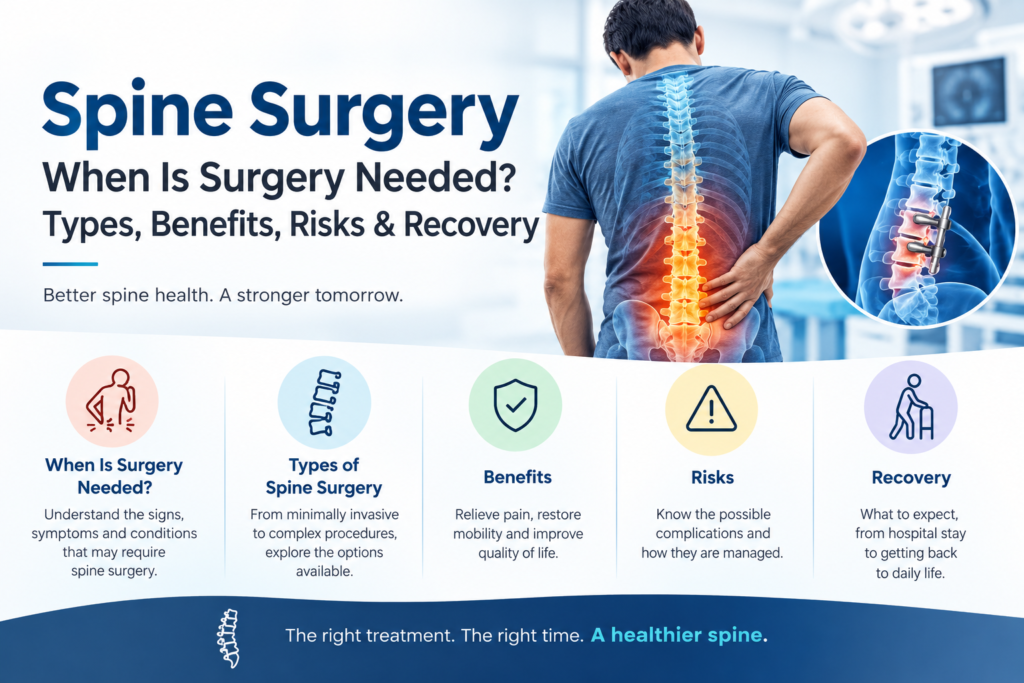
Back pain and neck pain are common problems that can interfere with work, sleep, walking, and daily activities. While most cases improve without surgery, some patients develop persistent pain, nerve compression, spinal instability, or spinal cord compression that may require surgical treatment.
For patients searching for information about spine surgery in Chhatrapati Sambhajinagar (Aurangabad), understanding when surgery is necessary, which procedures are available, and what recovery involves can help reduce anxiety and support informed decisions.
What Is Spine Surgery?
Spine surgery involves treating disorders of the vertebrae, intervertebral discs, spinal cord, or nerves. Depending on the condition, surgery may relieve pressure on nerves, remove damaged disc material, stabilise the spine, correct deformity, or treat a fracture, infection, or tumour.
The objective is to improve symptoms and function while protecting the spinal cord and nerves. Surgery is not automatically required simply because an MRI shows a disc bulge or degenerative changes.
Common Spine Conditions That May Require Surgery
1. Slip Disc or Herniated Disc
Intervertebral discs act as cushions between the vertebrae. When disc material protrudes and presses on a nerve, it can cause pain, tingling, numbness, or weakness.
A lumbar disc herniation may cause sciatica, with pain travelling from the lower back into the buttock and leg. A cervical disc herniation may cause neck pain or pain radiating into the shoulder and arm.
Treatment usually begins with appropriate non-surgical care. Surgery may be considered when symptoms remain disabling despite adequate treatment or when significant neurological deficits develop.
2. Lumbar Spinal Canal Stenosis
Spinal canal stenosis means narrowing of the space available for the nerves. It can cause back pain, leg pain, numbness, or heaviness while standing or walking.
Some patients experience relief when sitting or bending forward. If symptoms substantially limit mobility and do not improve with suitable conservative treatment, decompression surgery may be considered.
3. Cervical Spondylosis and Spinal Cord Compression
Age-related changes in the cervical spine may narrow the spinal canal and compress the spinal cord. This condition is known as cervical myelopathy when the spinal cord is affected.
Warning symptoms may include:
- Difficulty with balance or walking
- Increasing clumsiness of the hands
- Difficulty fastening buttons or handling small objects
- Weakness or numbness in the arms or legs
- Changes in bladder or bowel function in more advanced cases
Suspected spinal cord compression requires prompt medical evaluation. Progressive neurological symptoms may warrant early surgical treatment to prevent further deterioration.
4. Spinal Fractures and Trauma
Road traffic accidents, falls, and other injuries can fracture vertebrae or damage supporting ligaments. Some fractures can be managed with appropriate bracing and observation, while unstable fractures or those associated with neurological compression may require surgery.
5. Spinal Tumours and Infections
Certain tumours or infections can damage the vertebrae, compress nerves, or destabilise the spine. Treatment may involve biopsy, decompression, stabilisation, antibiotics, cancer-directed treatment, or a combination of approaches.
When Is Spine Surgery Necessary?
Spine surgery may be recommended in situations such as:
1. Persistent, disabling pain despite an appropriate trial of non-surgical treatment.
2. Significant nerve compression associated with weakness or other neurological deficits.
3. Progressive spinal cord dysfunction.
4. Spinal instability or selected fractures.
5. Certain spinal tumours or infections requiring surgical intervention.
6. Emergency compression of nerves controlling bladder, bowel, or lower-limb function.
Important: New urinary retention, loss of bladder or bowel control, numbness around the groin or saddle region, or rapidly worsening leg weakness can indicate a serious condition such as cauda equina syndrome. Seek emergency medical care immediately.
What Are the Different Types of Spine Surgery?
1. Discectomy or Microdiscectomy
These procedures remove the portion of a herniated disc that is compressing a nerve. Microdiscectomy uses magnification and specialised instruments to access the affected area.
The goal is generally to relieve radiating leg or arm pain caused by nerve compression. The amount of disc removed and the surgical approach depend on the case.
2. Laminectomy and Decompression
A laminectomy removes part of the vertebral bone called the lamina to create more space for compressed neural structures. Other forms of decompression may remove or reshape bone and thickened tissue around the nerves.
These operations may be used for selected cases of spinal canal stenosis.
3. Spinal Fusion
Spinal fusion joins two or more vertebrae to reduce movement at a painful or unstable segment. Screws, rods, cages, bone grafts, or other implants may be used when indicated.
Fusion may be considered for selected cases of instability, deformity, fractures, or degenerative disease. It is not necessary for every disc prolapse.
4. Cervical Spine Surgery
Depending on the condition, cervical procedures may involve removing a disc, decompressing the spinal cord, or stabilising the affected vertebrae.
The choice between an anterior approach, a posterior approach, or another technique depends on the location and extent of compression, spinal alignment, and other clinical factors.
5. Endoscopic Spine Surgery
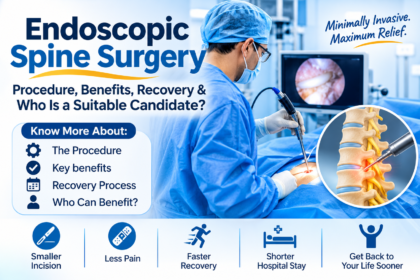
Endoscopic techniques use a small camera and specialised instruments introduced through a limited access route. In suitable patients, they can be used to remove herniated disc material or decompress selected spinal structures.
Endoscopic surgery is not appropriate for every spinal disorder, particularly when extensive stabilisation or a different surgical approach is required.
6. Surgery for Spinal Trauma, Tumours, or Infection
These operations may require decompression, removal of abnormal tissue, stabilisation, or a combination of procedures. The plan depends on the underlying disease and the degree of neurological involvement.
What Are the Benefits of Spine Surgery?
When appropriately indicated, spine surgery may:
- Relieve pain caused by nerve compression
- Improve walking tolerance and daily function
- Reduce pressure on the spinal cord or nerves
- Help preserve neurological function
- Stabilise an unstable spinal segment
- Treat selected fractures, tumours, and infections
The extent of improvement varies. Surgery may relieve nerve pain more predictably than longstanding numbness or weakness, and it may not eliminate all back or neck pain.
What Are the Risks?
Possible complications include:
- Infection or wound-healing problems
- Bleeding
- Blood clots
- Injury to a nerve or the spinal cord
- Cerebrospinal fluid leakage
- Persistent or recurrent symptoms
- Recurrent disc herniation
- Failure of fusion or implant-related complications, where applicable
- Anaesthesia-related complications
The risks differ according to the procedure, the patient’s medical conditions, and the complexity of the spinal disorder.
Recovery After Spine Surgery
Recovery depends on the operation, the severity of the original condition, and the patient’s general health.
First Few Days
The team monitors pain, wound healing, limb strength, sensation, and mobility. Many patients are encouraged to sit, stand, and walk as early as safely possible.
First Few Weeks
Patients should follow instructions regarding wound care, medicines, lifting, bending, driving, and returning to work. The recommended restrictions vary according to the procedure.
Physiotherapy and Rehabilitation
Exercises may help restore mobility, strength, posture, and confidence. The timing and type of physiotherapy should be guided by the treating team.
Long-Term Recovery
Recovery after a straightforward decompression may differ considerably from recovery after spinal fusion or complex trauma surgery. Fusion, in particular, requires time for bone healing, and follow-up imaging may be needed.
Seek prompt medical attention for new weakness, worsening numbness, fever with wound problems, uncontrolled pain, or other concerning symptoms after surgery.
Can Spine Problems Be Treated Without Surgery?
Yes. Depending on the diagnosis, treatment may include:
- Activity modification and advice on safe movement
- Appropriate pain-relieving medicines
- Physiotherapy and guided exercises
- Rehabilitation and posture education
- Selected injections or other pain-management procedures
Treatment should be tailored to the patient’s symptoms and examination. Prolonged bed rest is generally not recommended for uncomplicated back pain.
How to Prepare for a Spine Surgery Consultation
Bring your MRI or CT scans, reports, previous prescriptions, and a list of current medicines. Inform the surgeon about diabetes, blood pressure problems, allergies, previous operations, and medicines that affect blood clotting.
Ask your surgeon:
- What is the exact diagnosis?
- Is surgery necessary now, or are non-surgical options reasonable?
- What improvement can realistically be expected?
- What are the alternatives and procedure-specific risks?
- How soon can I walk, work, drive, and resume normal activities?
Spine Surgery at Life Multispeciality Hospital
Life Multispeciality Hospital and Trauma Center in Chhatrapati Sambhajinagar (Aurangabad) offers neurosurgical and spine evaluation, with facilities including endoscopic spine equipment, an operating microscope, and intensive care support.
Treatment options are considered according to the patient’s diagnosis and clinical needs. Not every patient requires surgery, and complex conditions may require additional specialist services or referral.
Frequently Asked Questions
1. Is surgery necessary for every slip disc?
No. Many patients improve with non-surgical treatment. Surgery is considered when symptoms persist despite appropriate treatment or when significant neurological compression requires intervention.
2. Is spine surgery safe?
Spine surgery is performed for appropriate indications, but all procedures carry risks. Your surgeon can discuss the risks and expected benefits based on your condition.
3. How long does it take to recover?
Recovery ranges from weeks to several months, depending on the procedure, the patient’s health, and the underlying disorder.
4. Will spine surgery completely remove back pain?
Not necessarily. Surgery may be particularly effective for pain caused by nerve compression, but other sources of back pain can remain.
5. Can I walk after spine surgery?
Many patients are encouraged to start walking early under supervision when medically appropriate. The exact timing depends on the procedure and the patient’s condition.
Conclusion
Spine surgery can be an effective treatment for selected cases of disc prolapse, spinal stenosis, spinal cord compression, instability, trauma, and other spinal disorders. A careful evaluation helps determine whether surgery is necessary and which approach is most appropriate.
If neck or back pain is affecting your daily life, consult a qualified spine specialist to understand the diagnosis and available treatment options.
For spine consultation, contact Life Multispeciality Hospital and Trauma Center, Chhatrapati Sambhajinagar (Aurangabad) .
Medical disclaimer: This article is for educational purposes only and is not a substitute for professional medical advice.